
The travel industry has a problem with words. Walk through any luxury hotel conference, and you’ll hear the same ones lobbed around like currency: “authentic,” “experiential,” “transformative.” Marketing teams deploy them with the confidence of people who’ve never actually stayed anywhere transformative. The couples booking their anniversary trips debate them endlessly—she wants “authentic,” he wants “comfortable,” they both say “experience” like it’s something you can order from room service.
But the hotels that opened in 2025 suggest the industry might finally be asking better questions. After surveying this year’s most ambitious openings across six continents, a pattern emerges: The properties worth anyone’s time aren’t selling comfort, authenticity or even experience. They’re selling something rarer: the chance to move through the world differently, even temporarily.
The thread connecting them isn’t luxury or location but obsession. Behind each property stands someone who looked at conventional wisdom and chose violence. The couple who decided their Cretan hotel’s roof should be someone else’s olive grove. The architect who thought Prague’s most oppressive Communist-era tower just needed better lighting and a sense of humor. The chef who built an entire restaurant around the radical idea that garbage doesn’t exist.
These hoteliers aren’t chasing trends or conducting market research, but building the hotels they wish existed, then betting there are enough like-minded travelers to fill them. They’re right. In an age when every city has the same glass tower with the same infinity pool serving the same burrata, the real luxury has become specificity. Hotels that do one thing—whether that’s zero-waste dining or gorilla voyeurism or forcing you to walk five days just to check in—and do it with the conviction of people who’d rather be perfect for some than pleasant for all.
The Most Noteworthy 2025 International Hotel Openings
-
Nekajui, A Ritz-Carlton Reserve: Unspoiled glamour on Costa Rica’s Papagayo Peninsula -
Macam Hotel, Lisbon: Fusing contemporary art with palace hospitality -
Rosewood Miyakojima: Embracing Japan’s tropical frontier -
Capella Taipei: Crafting a mansion-like retreat in the city -
Fairmont Golden, Prague: Reviving a modernist icon on the Vltava -
Gorilla Forest Lodge, Bwindi: Luxury perch in Uganda’s misty jungles -
Tella Thera: A sustainable sanctuary on Crete’s untouched coast -
Maison Dada: Art, nostalgia and rebirth in Beirut -
Shakti Prana: High-altitude solace in the Indian Himalayas -
Hôtel Massé, Paris: A stylish sanctuary under the radar -
Mandarin Oriental, Vienna: Imperial splendor meets modern comfort
Nekajui, A Ritz-Carlton Reserve: Unspoiled glamour on Costa Rica’s Papagayo Peninsula
- Peninsula Papagayo, End of the 253 National Route, Provincia de Guanacaste, Liberia, 50104, Costa Rica | Opened February 2025
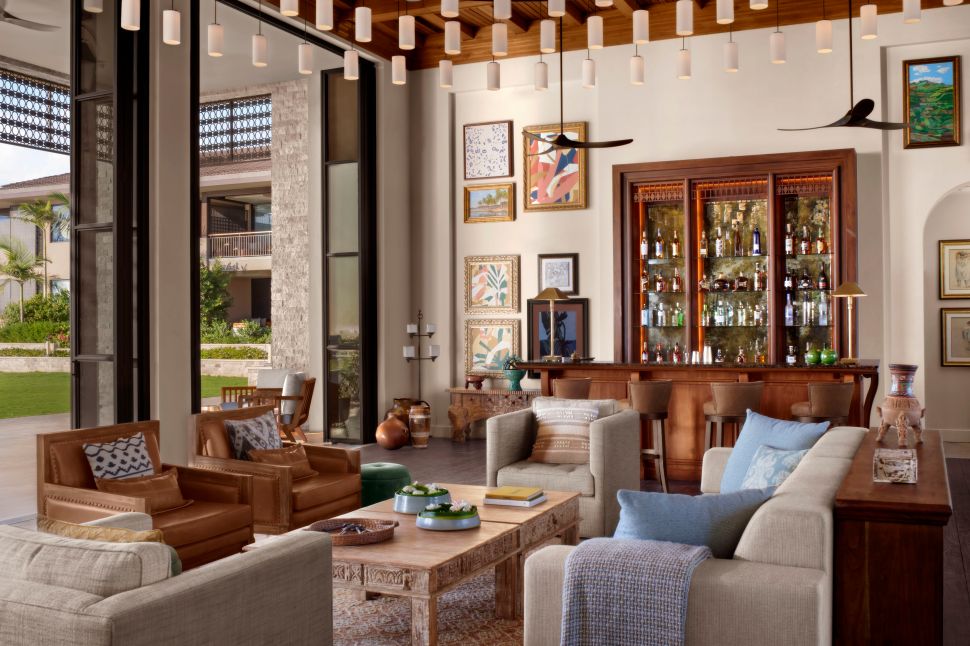
Central America’s first Ritz-Carlton Reserve opened its doors in early 2025, inviting guests into an ultra-luxurious hideaway on Costa Rica’s wild Pacific coast. Set on a lush hillside above Pochote Bay, Nekajui (its name means “garden” in the Chorotega language) comprises 107 ocean-facing suites and a handful of canvas-topped treetop tents, plus 36 private residences tucked discreetly into the landscape. The design is contemporary and high-touch, yet with a strong sense of place: local art and crafts adorn the airy, wood-and-stone villas and every angle offers sweeping jungle and sea vistas. Days at Nekajui strike a balance between adventure and pampering. One morning might find guests riding a funicular down the cliff to Niri Beach Club for a surf or snorkel, and the next, luxuriating in a volcanic clay body treatment at the 27,000-square-foot Nimbu Spa, which features open-air hydrotherapy pools overlooking the ocean.

Nekajui
Macam Hotel, Lisbon: Fusing contemporary art with palace hospitality
- R. da Junqueira 66, 1300-343 Lisboa, Portugal | Opened March 2025
Set between Lisbon’s Alcântara and Belém districts along the Tagus, Macam blurs the line between museum and hotel. Housed in the restored 18th-century Palácio Condes da Ribeira Grande, the property combines the new Museu de Arte Contemporânea Armando Martins—nearly 22,000 square feet of gallery space—with a 64-room five-star hotel across the palace and a sleek modern wing. Minimalist rooms in natural tones let original features (arched windows, baroque stonework) shine amid over 600 contemporary artworks by the likes of Marina Abramović and Olafur Eliasson displayed throughout. Guests wander from a light-filled library lounge to a desacralized chapel-turned-auditorium, often mingling with locals at the on-site galleries. Come dinnertime, chef Tiago Valente’s restaurant offers organic Portuguese farm-and-sea flavors, some ingredients grown in Macam’s own gardens, while a café and wine bar reinforce that this spot is as much a cultural hub as a place to sleep.

Macam Hotel
Rosewood Miyakojima: Embracing Japan’s tropical frontier
- Nikadori-1068-1 Hirara, Miyakojima, Okinawa 906-0008, Japan | Opened March 2025
For its Japanese debut, Rosewood skipped the big cities and landed on the little-known isle of Miyako-jima, Okinawa, a remote paradise of sugarcane fields and turquoise sea. The Studio Piet Boon-designed retreat features 55 secluded pool villas, each crafted from local Ryukyu limestone and embodying a study in wabi-sabi elegance, with indoor-outdoor living spaces that open to pristine ocean views. The vibe is exclusive castaway meets Japanese ryokan: mornings might begin with yoga by a private plunge pool and end with sunset over Yonaha Maehama beach (a four-mile stretch of powdery sand renowned as Japan’s best). In between, guests sample locally grounded luxury, whether savoring Okinawan seasonal cuisine at the island-sourced restaurant Choma or Italian fare at Nagi, or unwinding at the beachside infinity pool, Asaya spa, or Rosewood Explorer’s Club for children. By planting ultra-luxe villas amid jungle and coral reefs, rather than Tokyo high-rises, Rosewood Miyakojima offered an immersive escape to an “unseen” side of Japan.

Rosewood Miyakojima
Capella Taipei: Crafting a mansion-like retreat in the city
- No. 139, DunHua N Rd, Songshan District, Taipei City, Taiwan 105 | Opened April 2025
André Fu designed this place like a Murakami novel—superficially calm with weird depths you only discover at 2 a.m. The 86-room Capella sits on tree-lined Dunhua Road, as if it has been there forever, which in Taipei terms means at least three years. But step inside and time does that thing it does in certain Asian hotels, where your heartbeat actually slows down, like the building has its own gravitational pull. The three-story bar is where things get interesting. First floor: cocktails for people who still have meetings tomorrow. Second floor: Japanese vinyl playing Blue Note records you’ve never heard but somehow recognize. Third floor: whiskeys that cost more than your flight, poured by a bartender who studied under Hidetsugu Ueno and will judge you (silently) if you add ice without asking for the right kind. The whole setup feels like that scene in Lost in Translation where nothing happens, and everything happens—except you’re Bill Murray and Scarlett Johansson and the city outside might as well be Mars.

Capella Taipei
Fairmont Golden, Prague: Reviving a modernist icon on the Vltava
- Pařížská 30; Prague, Czech Republic, 110 00 | Opened April 2025
After a four-year, top-to-bottom renovation of the former InterContinental, Prague’s 1970s brutalist landmark was reborn as the Fairmont Golden Prague—a contemporary luxe hotel layered with Czech Modernist soul. Architect Marek Tichý’s restoration preserved the structure’s concrete-and-glass integrity while celebrating local art: thistle-like chandeliers by René Roubíček and abstract metal lights by Hugo Demartini were revived amid sleek new interiors. The hotel’s creative spirit extends to its social spaces—from partnering with the Karlovy Vary Film Festival to inspire the new Coocoo’s Nest bar (a nod to One Flew Over the Cuckoo’s Nest director Miloš Forman)—and to its amenities. All 320 rooms and six restaurants (including the storied Zlata Praha rooftop) feel refreshed, and a 15,000-square-foot Fairmont Spa now boasts central Prague’s only outdoor pool tucked above the Old Town’s rooftops.

Matias Vargas Antognelli
Gorilla Forest Lodge, Bwindi: Luxury perch in Uganda’s misty jungles
- Bwindi Impenetrable Forest, Uganda | Opened June 2025
This isn’t a hotel where gorillas might visit. This is a hotel built inside their commute. The ten suites are strung along the jungle edge like prayer beads, and every morning around 6 a.m., you’ll hear them—not roaring like King Kong, but chatting, like your neighbors if your neighbors weighed 400 pounds and could bench press a Land Rover. The design is what would happen if Wes Anderson got really into sustainable architecture and African textiles: banana-leaf ceilings that sound like jazz brushes when it rains, clay walls mixed with elephant dung (stay with me—it’s antimicrobial and doesn’t smell), copper tubs positioned so you can bathe while watching colobus monkeys critique your form. But none of that matters once you meet your first gorilla family.

Gorilla Forest Lodge
Tella Thera: A sustainable sanctuary on Crete’s untouched coast
- Kissamos 734 00, Crete, Greece | Opened July 2025
This is what happens when an Airbnb algorithm becomes sentient and decides to save the world. The genius is in the mundane made profound. Your olive trees aren’t decorative—they’re working, dropping fruit that ends up in your dinner, their roots drinking your shower water like some closed-loop system dreamed up by a stoned permaculturist. Inside, everything feels like it was made by someone who actually lives here: tree-trunk tables still showing bark, Coco-Mat beds that cost more than a small car but make you understand why Greeks invented the concept of divine sleep, stone floors that stay cool even when it’s 90 degrees outside. You’ll eat dinner watching the sun melt into the Aegean, feeling virtuous about your zero-waste meal until you remember you flew here on a jet that burns dinosaurs. But that’s the thing about Tella Thera. It just shows you another way to live, then sends you home to your modern life with impossible standards and a slight olive oil addiction.

Tella Thera
Maison Dada: Art, nostalgia and rebirth in Beirut
- Al Arz, Beirut, Lebanon | Opened October 2025
The El Dada brothers turned their family’s 1935 building into a genuinely stylish boutique hotel that maintains a sense of play. Three suites, 60 artworks, one glass elevator that doubles as a vertical cinematograph. The entire property is a thesis statement about Beirut: that beauty and catastrophe aren’t opposites but dance partners. The burgundy suite features original encaustic tiles that survived the Civil War, stained glass that transforms afternoon light into a Rothko and a view of construction cranes and Roman ruins coexisting in the same frame, as if it’s totally normal (in Beirut, it is). The ground-floor café is where the city’s creative class congregates after midnight, like architects arguing in French, artists smoking in Arabic, everyone switching to English when they want to be really clear about their disappointment. This is a hotel for people who understand that Beirut’s magic isn’t despite its contradictions—it’s the contradictions themselves, gift-wrapped in marble and served with Turkish coffee strong enough to raise the dead.

Courtesy of Walid Rashid
Shakti Prana: High-altitude solace in the Indian Himalayas
- Kumaon, India | Opened October 2025
You know that guy who says the journey is the destination? He’s usually wrong, but at Shakti Prana, he’s accidentally right. You literally cannot get here without walking five days through Kumaon villages where people still think Instagram is a spice. By day three, you’re having philosophical conversations with goats. By day five, when you finally see these seven stone cottages spread across the ridge like a Himalayan haiku, you’re either enlightened or delirious—honestly, it’s hard to tell at altitude. The cottages themselves are what would happen if Dieter Rams designed a monk’s cell, then remembered he wasn’t a monk: glass walls that make privacy irrelevant (the nearest neighbor is a golden eagle) and fireplaces that actually heat the room instead of just looking authentic. The chef, who hiked up the same path carrying ingredients on his back like some culinary sherpa, makes Kumaoni lamb curry that tastes like what Anthony Bourdain was always searching for: that perfect bite that explains an entire culture.

Shakti Prana
Hôtel Massé, Paris: A stylish sanctuary under the radar
- 32 Bis Rue Victor Massé, 75009 Paris, France | Opened November 2025
Some hotels flaunt their pedigree. Hôtel Massé slips through a side door in South Pigalle and lets the details speak for themselves. Siblings Corto and Eole Peyron carved out 40 rooms above a green marble storefront, naming it for their great-grandfather. Interiors by Gasparetto Parenti eschew the obvious: burgundy walls and golden-hued wood paneling evoke 1970s Milan more than Belle Époque Paris. Beds face curved walnut headboards instead of screens. The café-bar, Trente, opened fashion week-adjacent with wines from small French producers, house vermouths and a short list of plates best described as “tinned fish, but make it sexy.” There’s no gym, but a slip of a massage room hidden behind the concierge desk if you know who to ask.

Hôtel Massé
Mandarin Oriental, Vienna: Imperial splendor meets modern comfort
- Riemergasse 7, 1010 Wien, Austria | Opened December 2025
The Viennese turned a courthouse into a hotel, because it is quintessentially Viennese to transform a place of judgment into one of indulgence while maintaining the exact same level of scrutiny. The 151-room Mandarin Oriental occupies an Art Nouveau building on the Ringstrasse that spent a century sending people to prison and now sends them to a spa where the towels are warmer than human affection. What works is the honesty about what this place was. They kept the marble hallways where lawyers once paced, the wrought-iron lift that carried verdicts, the imposing proportions that made defendants feel appropriately small. But now it’s softened with that particular Mandarin Oriental trick of making institutional architecture feel residential—like you’re staying in the apartment of a judge who collected mid-century furniture and had excellent taste in cashmere.

Mandarin Oriental
Observer








Leave a Reply