
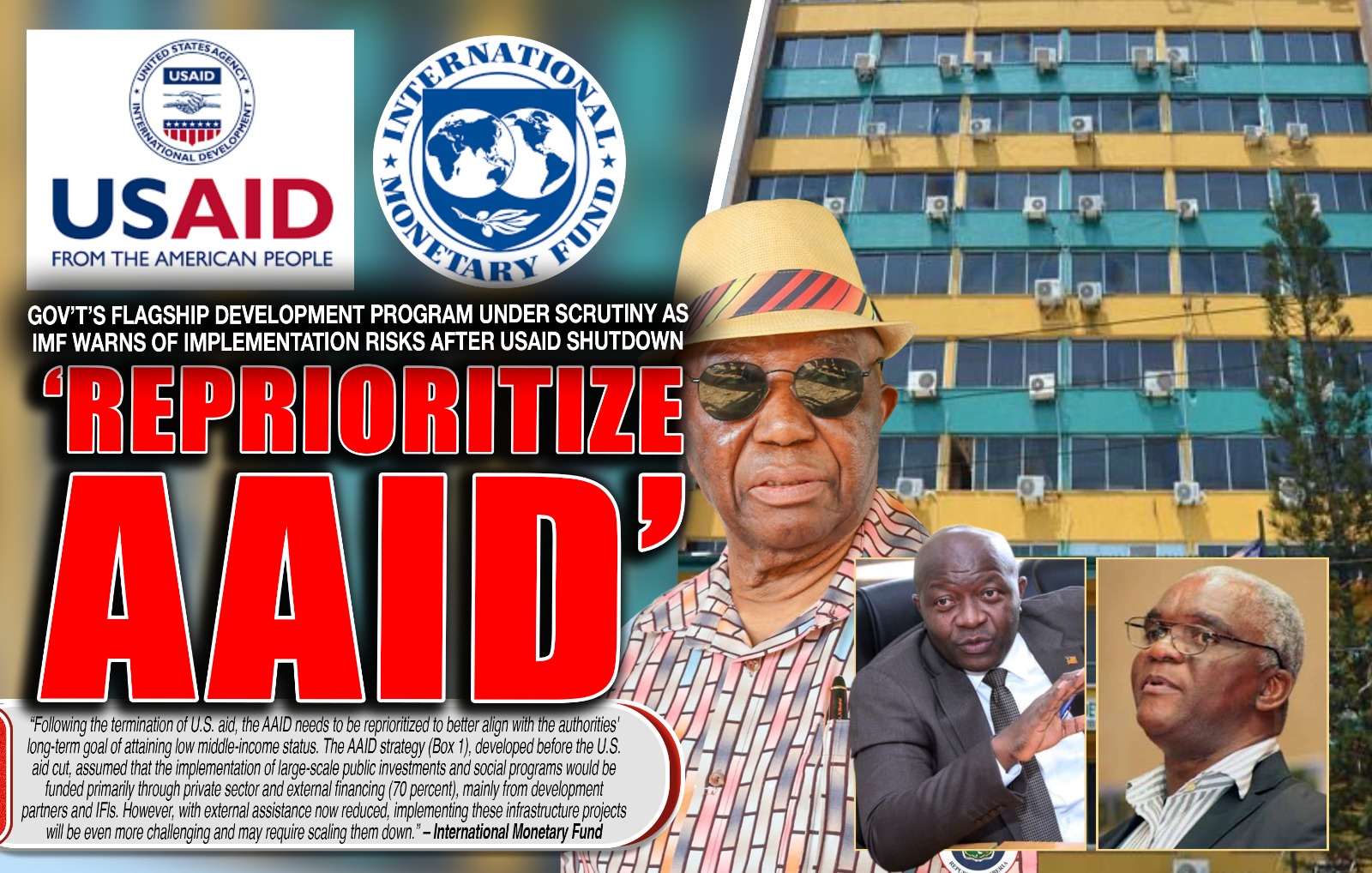
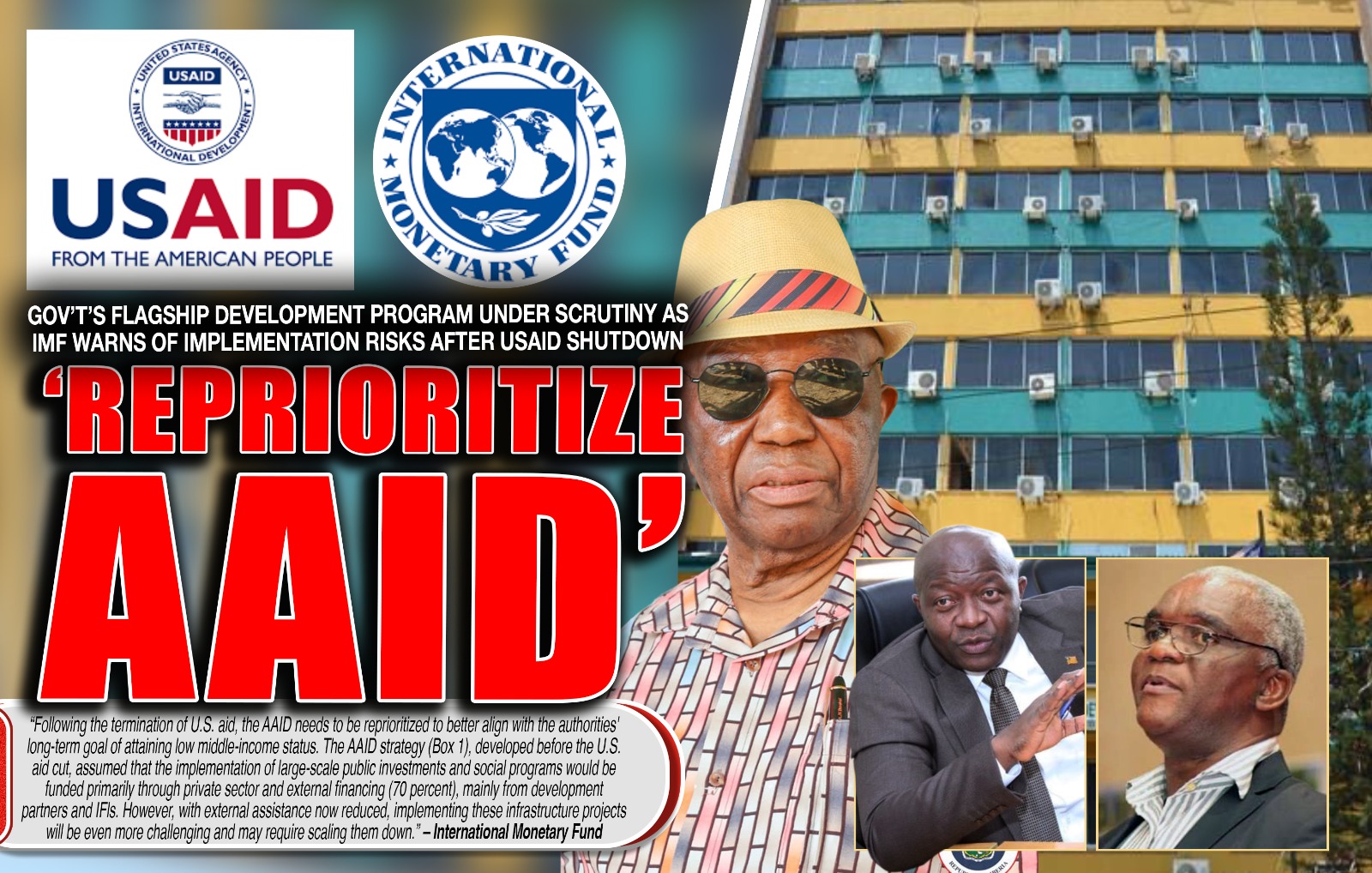
MONROVIA -The government’s flagship development program, the ARREST Agenda for Inclusive Development, is facing intense scrutiny following the termination of key external aid, with the International Monetary Fund warning that the plan’s current scale and financing assumptions carry serious implementation risks in the wake of the USAID shutdown and the gradual withdrawal of other partners, including Sweden.
By Selma Lomax, Selma.lomaxfrontpageafricaonline.com
In its latest assessment of the economy, the International Monetary Fund (IMF) cautioned that the AAID, which was designed as the central policy framework to transform the country under the Unity Party (UP) administration, must be urgently reprioritized to reflect the new and more constrained financing reality.
The Fund said the strategy was developed at a time when Liberia could reasonably expect substantial external assistance, particularly from the United States and other bilateral and multilateral partners, and was built on the assumption that about seventy percent of its financing would come from private sector participation and external partners, with the government contributing the remaining thirty percent.
According to the IMF, that assumption has now been fundamentally altered. Following the termination of U.S. aid, the Fund said the AAID needs to be realigned with the authorities’ long term objective of attaining low middle income status under far tighter fiscal conditions.
The IMF noted that the strategy assumed large scale public investments and expansive social programs would be funded primarily through development partners and international financial institutions, but with external assistance now sharply reduced, implementing these infrastructure projects will be significantly more challenging and may require scaling them down.
The warning comes amid growing concern over the feasibility of the AAID’s ambitious financing envelope. The plan envisages nearly eight point four billion U.S. dollars in investments over the 2025 to 2029 period, an amount almost twice Liberia’s gross domestic product in 2024. The IMF said that pressing ahead with the plan in its current form, without adjusting to declining partner support, could expose the economy to severe risks.
“With development partner support declining and limited prospects for substantial increases in foreign direct investment, relying on non concessional borrowing to fund the ambitious development and social spending could jeopardize macroeconomic stability and external sustainability,” the IMF said, warning that relatively weak implementation capacity also calls for a cautious and measured approach.
A major immediate shock to the country’s financing outlook, the IMF highlighted, was the permanent cancellation in February 2025 of nearly all active USAID projects, totaling about 434 million U.S. dollars. The Fund said this amount is equivalent to roughly seven percent of Liberia’s GDP over the next four years and represents a significant loss of grant financing that had been supporting key sectors such as education, health, agriculture, and social protection.
The IMF warned that the termination of USAID programs will have wide ranging economic and social effects, including job losses among locally hired staff, reduced opportunities for domestic contractors, higher levels of non-performing loans in the banking system, and a shortfall in tax revenues that had been generated indirectly through aid related economic activity.
It also cautioned that the cancellations will create major funding gaps in social programs that disproportionately affect the most vulnerable segments of the population.Beyond the immediate loss of U.S. assistance, the Fund pointed to deeper structural challenges that complicate implementation of the AAID.
Years of conflict have left Liberia with large infrastructure deficits, weakened institutions, and depleted human capital. Poverty remains widespread, with estimates suggesting that about sixty percent of Liberians live below the poverty line, while the economy remains heavily dependent on agriculture and mining, sectors that are vulnerable to external shocks and provide limited broad based employment.
Launched in January 2025, the AAID groups policy priorities under six pillars, including economic transformation, infrastructure development, governance and anti-corruption, rule of law, environmental sustainability, and human capital development.
The plan targets average annual economic growth of about six percent and aims to raise per capita income to one thousand U.S. dollars by 2029. While the IMF acknowledged that these goals are broadly well conceived and aligned with Liberia’s long term aspirations, it stressed that the scope and financing of the agenda must now be revisited.
The Fund urged the government to reprioritize the AAID by reordering projects based on urgency and impact, scaling down initiatives where necessary, and substantially increasing the domestic revenue contribution. It also emphasized the need to seek more grants and highly concessional financing to preserve debt sustainability, warning that excessive reliance on expensive, non-concessional loans could undermine the country’s fragile macroeconomic foundations.
Strengthening public investment management and improving implementation capacity were also highlighted as critical steps to ensure value for money and rebuild confidence among development partners. The IMF said that while investing in critical infrastructure such as roads, electricity, and water systems is essential to unlock
growth potential, prudent financing and strong institutions are necessary to avoid waste and safeguard long term stability.
The Fund’s assessment was delivered as part of Liberia’s 2025 Article IV Consultation and the second review under the Extended Credit Facility arrangement, which unlocked a disbursement of about 26.5 million U.S. dollars.
The IMF noted that Liberia has recorded generally satisfactory performance under the program, including progress in fiscal consolidation and debt management, but stressed that the external environment has become more challenging due to declining aid flows.
The bottom line of the IMF’s warning is that the government has consistently trumpeted the AAID as the transformative program that will reshape Liberia under the Unity Party administration, projecting that more than eight billion U.S. dollars would be generated to drive development.
A significant portion of this projected financing was expected to come from international partners, including USAID and other bilateral donors. With USAID now gone and Sweden also preparing to exit, the IMF says that achieving the government’s ambitious goals will be far more difficult in the absence of these vital support lines unless the agenda is sharply reprioritized and domestic resources are significantly increased.
In response to the growing public debate, a consultant at the Ministry of Finance and Development Planning, Benedict Harleyson, pushed back against claims that the IMF has declared the ARREST Agenda unrealistic or a threat to macroeconomic stability. He said such interpretations are misleading and do not reflect the Fund’s actual position.
According to Harleyson, the IMF has not stated that the AAID is unachievable or advised that it be abandoned. He said the Fund recognizes the ARREST Agenda as Liberia’s official development framework and has structured its financial support and policy guidance around ensuring its success.
He explained that the IMF’s role is to assess risks, highlight constraints, and outline conditions necessary for successful implementation, noting
that warnings about fiscal, institutional, or financing risks are standard features of IMF reports worldwide.
He stressed that the IMF’s emphasis on declining external financing, the need for stronger domestic revenue mobilization, prudent borrowing, and improved institutional capacity should not be interpreted as rejection of the Agenda itself.
Instead, he said, these cautions are meant to guide responsible implementation. Harleyson pointed out that the IMF’s approval of a multi year Extended Credit Facility program demonstrates that it considers the Agenda feasible under the right conditions.
In his view, the IMF’s position is that the ARREST Agenda can succeed, but only if it is executed with discipline, supported by effective revenue collection, prudent debt management, and strengthened institutions. He warned that portraying IMF cautions as proof that the Agenda is unrealistic misrepresents the Fund’s actual stance, arguing that the IMF is not opposing the government’s development vision but is instead providing a roadmap to achieve it without undermining macroeconomic stability.
The post Liberia: Gov’t’s Flagship Development Program Under Scrutiny as IMF Warns of Implementation Risks After USAID Shutdown appeared first on FrontPageAfrica.


Leave a Reply