
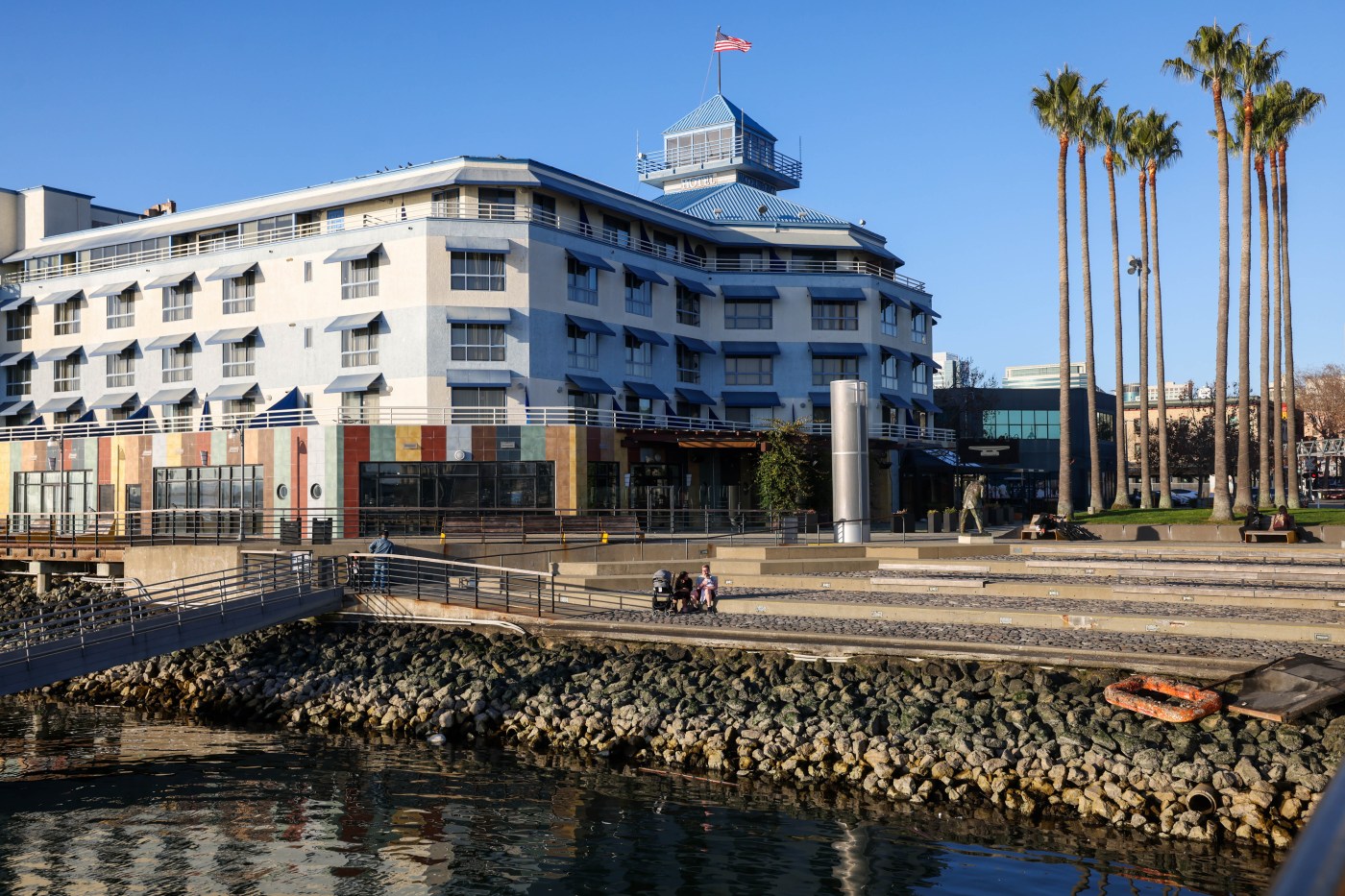
Jack London Square should be Oakland’s crown jewel: a waterfront district where people come to walk, eat, gather and feel the city’s energy. It has the views, the history, the ferry access and a setting most cities would envy.
And yet it’s slipping — badly. Jack London Square is declining because it’s being managed without urgency and allowed to drift into neglect.
As the manager of Scott’s Seafood Grill & Bar, I’ve watched it happen in slow motion. Our business has experienced recessions, booms and everything in between. We stay because we believe in Oakland and because we believe the square should be a destination.

Instead, we’ve seen vacancies, churn and business closures — and long stretches where the square feels half-open and overlooked. Today, the square’s ground-floor space is more than 50% vacant.
The dining scene that once made Jack London Square a draw has been hollowed out, one closure at a time. A dark storefront is a reason not to come. Fewer visitors mean the remaining businesses struggle. Then more closures follow.
That is what happens when you put a destination on autopilot. But the decline is not inevitable. It’s the result of choices — or, more accurately, the result of avoiding choices by the Port of Oakland and its property manager, CIM Group.
The square’s future will be shaped by decisions: what gets prioritized, who gets recruited, what gets fixed, what gets ignored. That takes leadership and investment.
Other waterfront districts understand that. Look at San Francisco’s Fisherman’s Wharf. It has faced challenges, too. The difference is accountability: deliberate tenant recruitment, constant marketing, year-round events and public spaces that feel clean and welcoming.

Oakland deserves the same. For a thriving square, you don’t just “fill space.” You build an ecosystem: restaurants, local retail, arts and culture, family-friendly activity, waterfront events, and public spaces that feel safe and inviting. And you support the businesses that are already carrying the district — before you recruit the next ones.
The Port of Oakland and CIM Group should commit to a 12-month plan with measurable results — cleanliness and safety standards, lighting and amenity upgrades, targeted tenant recruitment, waterfront programming and a real marketing strategy — paired with a timeline, benchmarks and quarterly public reporting on progress.
Fifty years in business teaches you something: places don’t stay great because they used to be great. They stay great because leaders choose to build them — and are willing to be accountable for the outcome.
Raymond Gallagher is the owner of Scott’s Seafood Grill & Bar.
The Mercury News




Leave a Reply