

The 2010s marked the streaming industry’s adolescence. Coupling a creative unshackling with the thrill of unbridled newness left those in the media bubble positively cooing like first-time parents. That would make the streaming boom of 2019-2022 its experimental college years. All that youthful optimism funneled into an unprecedented expansion. Yet since then, streaming has eventfully entered the “real world.” The industry is now a young adult assimilating into the steady nine-to-five routine. Growth is no longer driven by splashy hype. Instead, it is the reliability of habit that wins the day. And the data seems to back that up.
Nielsen recently released its annual top streaming performance lists, meaning we now have yearly leaders from 2020 to 2025. Last year saw a 19 percent uptick in total U.S. streaming minutes compared to 2024. Yet, while streaming time is up, the variety of hits isn’t exactly following suit. Top 10 lists across original streaming series, acquired (licensed) series, and movies remain dominated by the same intellectual properties making multiple appearances.
The overall performances speak loudly to what audiences want in the streaming age and which companies are giving it to them.
Why the same shows keep winning
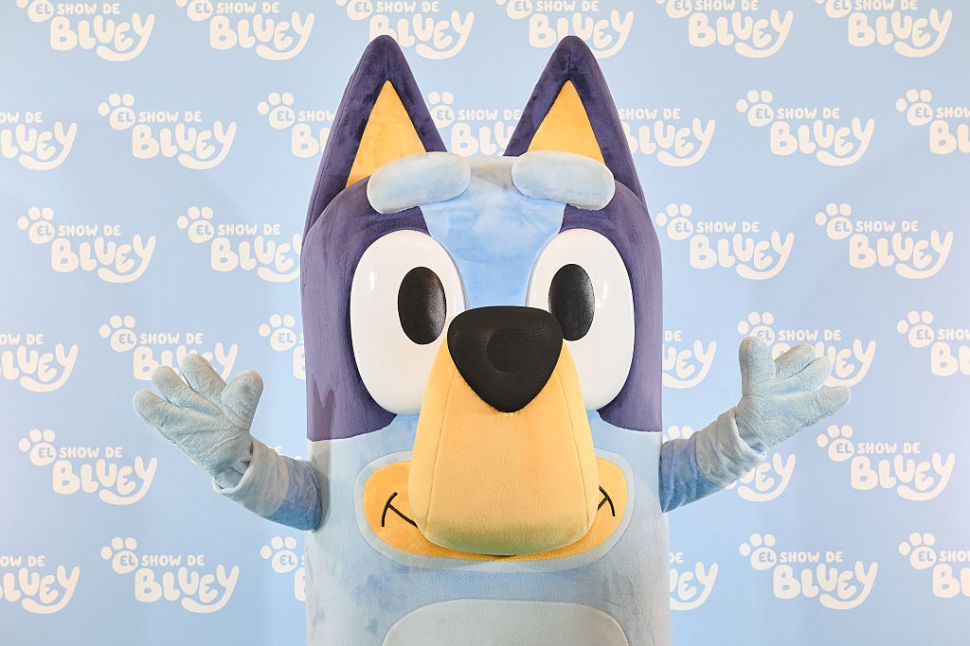
Just as the New England Patriots and Los Angeles Lakers always seem to be in the playoffs, sitcoms, procedurals and animated kids’ fare consistently rank among the best-performing titles year in and year out. Bluey (1st), Grey’s Anatomy (2nd), NCIS (4th), SpongeBob SquarePants (5th), The Big Bang Theory (8th) and Criminal Minds (10th) were not only among the 10 most-streamed shows overall in 2025, but have made multiple appearances across top “Acquired” and “Overall” TV lists in the last half decade. (No wonder there’s a Bluey movie en route). Just one streaming original series (Stranger Things, 2nd) managed to claw its way onto the overall Top 10.
Most of these shows, and the majority of the “Acquired” TV lists, consist of libraries with hundreds of episodes. (Nielsen’s minutes-viewed metric rewards longer-running series with many episodes). Yes, new action and thrillers thrive on the small screen. But audiences do gravitate toward laundry-folding comfort shows a bit more than cultural daggers. Returning hits capture the largest share of attention, while new hits are more on the periphery of the highest levels.
If your main character is a cop, doctor or cartoon, you just might have an edge.
Netflix leads in existing and new originals
Netflix laid claim to seven of the Top 10 most-streamed originals in 2025 (though 10th place airs on both Netflix and Amazon): Stranger Things (1st), Squid Game (2nd), Wednesday (3rd), Ginny & Georgia (6th), The Night Agent (8th), Love Is Blind (9th), Gabby’s Dollhouse (10th). All of those shows have made multiple appearances in the yearly top 10s.
Even amid the regurgitation of familiarity, Netflix has managed to effectively launch new hits. First seasons (and/or one-season limited series) of Tiger King, Squid Game, Bridgerton, Maid, Wednesday, Dahmer, Inventing Anna, The Night Agent and Fool Me Once all made a Top 10 annual streaming original list in recent years.
Launching new shows proved more difficult last year, and all streamers struggle with original comedy. But even with the issues, Netflix was still responsible for the second most-watched new original drama (The Residence, which was admittedly cancelled), the two most-watched new comedies (Running Point and The Four Seasons) and the two most-watched new unscripted series (Sean Combs: The Reckoning and Million Dollar Secret). (Paramount+’s Landman and Peacock’s Love Island USA are the only Top 10 streaming originals making their first appearances this year).
Netflix is far less dominant in the “Acquired” and “Overall” lists. Its scale typically enables it to debut new shows fairly successfully, but sustaining them for the long term is trickier today.
Prestige doesn’t translate to the top 10 scale
Premium programming may be my bag, but the rest of the country apparently doesn’t agree.
Nielsen began tracking HBO Max in April 2022. Since then, not a single HBO title has made a top annual “Acquired Series” list. Granted, this is a post-Game of Thrones world, and making the “Acquired” list is far more competitive than the others. But still—surprising! HBO Max original The Pitt was the most-watched new original streaming drama in 2025. Appointment viewing furnishes a quality brand and drives regular weekly tune-in. But it’s a different model from the endless drawl of sitcoms and procedurals. It doesn’t automatically boast the same library value.
Then there’s the lack of Warner Bros. film representation. Due to the dominant rewatchability of kids’ films, Nielsen broke out a separate 2025 “General Audience Movie” list for the first time (Seven out of ten films were released between 2024-25). Despite WB’s stellar box office year, the studio’s only films among the Top 10 were the first two Harry Potter films, which were non-exclusive with Peacock. The data shows that fantasy is actually a high-upside genre across both film and TV if made accessible and not bogged down in intricate mythology.
On the flip side of this equation, Amazon Prime Video reaches an impressive 54 percent of U.S. households, according to Greenlight Analytics, where I work as Director of Insights & Content Strategy. The streamer has delivered select breakout shows such as The Boys, Reacher, Fallout, and Red One. But its quiet overall presence suggests viewers enjoy the service but have not yet added it to their regular entertainment routines.
Kids’ entertainment is beyond dominant
As the brilliant kids media analyst Emily Horgan often notes, children’s entertainment remains undervalued relative to its practical contributions. “While many think of the streaming wars as a battle for the buzziest new awards drama or star-studded blockbuster, the real SVOD clashes are fought in the trenches of regular daily usage,” Horgan wrote. “That’s where animated kids’ movies truly shine.”
Bluey has been the top overall title in back-to-back years, while Cocomelon was a mainstay on the charts in the early 2020s. Family-friendly movies and legacy IP have proven to be the algorithm-proof gift that keeps on giving.
Disney has firmly established squatter’s rights in this lane. Of the 70 top annual film slots from 2020-2025 (including Nielsen’s new bifurcated movie lists this year), 34 belong to Disney+. The company manages to land the same films—Moana, Zootopia, Frozen I and II and Encanto—onto multiple lists as does Universal’s Dreamworks and Illumination across Peacock and Netflix to a lesser extent.
Consistent box office returns plus guaranteed streaming viewership anoint kids’ entertainment as the king of all genres today.
Headlines for Hollywood
It’s important to remember that just because a given title doesn’t appear among the 10 most-streamed shows every year doesn’t mean it’s unsuccessful. There are plenty of hits to be found beyond this narrow snapshot.
Prestige, novelty and event programming are helpful brand builders with temporary pop. But familiar recyclability and consistency appear to yield the best results. Comfort viewing and long runways for early breakout hits serve as streaming’s foundation and pillars, respectively, while “new” events struggle with sustainability. In that way, the upper echelons of streaming viewership confirm the industry’s shift into more mundane, expected territory. Welcome to the workforce.
Observer




Leave a Reply