
OAKLAND — For over two decades, efforts to lift the Oakland Police Department out from under the watchful eye of a federal judge have fallen short. Now, though, the department may be nearing the finish line.
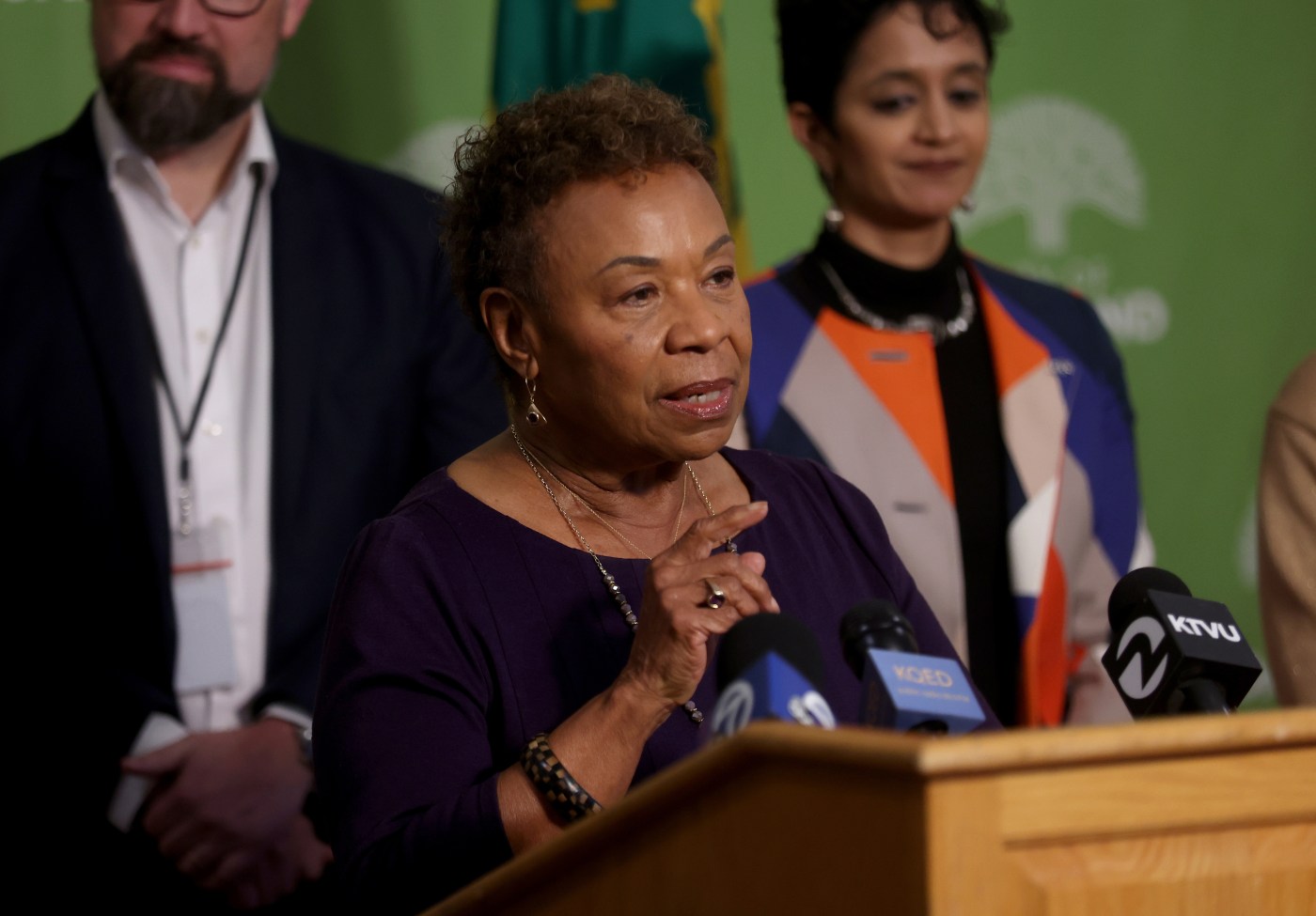
If Judge William Orrick does relinquish control of the often scandal-ridden department by the end of this year, he may ultimately credit Mayor Barbara Lee, the former congresswoman to whom Orrick offered glowing praise at a court hearing this week.
The department’s oversight, an unprecedented arrangement that began with the infamous Riders brutality scandal in the early 2000s, will continue at least until May. Orrick, however, believes OPD is at the “threshold” of full compliance because of the mayor’s willingness to implement long-term reforms.
“I have to say, there have been a few mayors who have expressed thoughtfulness about what to do” to get OPD to full compliance, he said, offering rare praise, at the Tuesday hearing. “No one until now has demonstrated an awareness and holistic understanding of what we need to do.”
Orrick lauded Lee, who took office last May, for her decision to install the city’s former inspector general, Michelle Phillips, as an official in the department’s top ranks. Phillips reports directly to the mayor, providing a direct window into the department’s accountability measures.
Last fall, Lee also appointed longtime OPD veteran James Beere as the interim police chief. Beere promptly assigned a deputy chief, Aaron Smith, to head the police internal affairs unit.
The direct lines of communication — between internal affairs and the chief, as well as the department and Lee — were received warmly by the court, which has often criticized OPD’s “ability to police itself.”

“I don’t think, if I had spent time on this, that I would have come up with the same thing,” said Orrick, who spoke with similar admiration about Lee at a hearing last July.
It is the most optimistic stance taken by the court in several years, signaling the possibility that OPD may soon need to answer only to Oakland’s local accountability officials, rather than to Robert Warshaw, a monitor appointed by the court to oversee the mandated reform effort.
Orrick’s positivity about Lee, meanwhile, suggests she is making good on a campaign promise to restore leadership in Oakland after an era of political dysfunction.
Oversight began with a massive police brutality case at the turn of the century, leading to a civil settlement that put OPD on the hook to comply with dozens of “tasks,” or standards around “constitutional policing.”
Several damaging scandals have leveled the department when it has previously come close to ending oversight. The most recent was a felony case against Phong Tran, a veteran homicide detective accused of bribing a witness in a murder case.
The fallout from Tran’s case was substantial: multiple members of OPD’s top command staff were disciplined or left their posts and several other Oakland murder cases were dismissed by prosecutors, while Orrick extended oversight indefinitely.
Now the department is improving. Jim Chanin and John Burris, a pair of civil rights attorneys who first litigated the police brutality cases, both acknowledged that oversight could potentially end within the year.

Chanin, a fierce police critic, praised the department’s current leaders — including Beere and Smith — for the improvements, in addition to Lee.
The progress, he said, marks a clear turnaround from former Chief Floyd Mitchell, who before resigning last fall openly criticized the stringent nature of federal oversight.
“The department now is actually led by people who believe in the (oversight settlement) and want to get it done,” Chanin said. “And that’s a big change.”
Still, the understaffed police department has a few hurdles to cross before reaching full compliance with the judge’s expectations.
OPD continues to struggle investigating misconduct claims within a court-ordered timeframe, though city officials promised this week that preliminary data in recent months indicate the department’s timeliness is back above the court’s threshold.
Ahead of the Tuesday court hearing, a newly surfaced internal report showed that OPD sustained disproportionately fewer misconduct claims in 2024 against white officers than Black or Latino officers.
Just 2% of misconduct claims against white officers, who comprise a quarter of the Oakland police force, were sustained, while Black officers and Latino officers were sustained 6% and 7% of the time, respectively.
For internally generated misconduct claims — lodged not by the public but within OPD itself — the gap was more stark: None of the eight complaints against white officers in 2024 were sustained, compared to seven of 15 claims against Black officers and four of 17 allegations against Latino officers.

City Attorney Ryan Richardson pushed back on the court’s latest findings, arguing instead for oversight to end.
A pre-hearing statement submitted by his office cites a quote by civil-rights attorney Ben Nisenbaum, who had told news media that OPD had been “transformed” successfully into a “constitutional policing model.”
Nisenbaum, a law partner of Burris’, later submitted his own statement to the court, claiming the city “distorted” his intended praise of Oakland’s improvement from the days of the infamous Riders brutality scandal.
“I do not even know what the Oakland Police Department’s actual obligations are” in the court settlement, he said.
Orrick, who did not acknowledge the city’s overtures, appeared more interested in what Lee had to say.
“I’m not ready either to end this, but I think we have the measures in place to stay on track,” Lee told the judge, noting later that she was focused “not just on compliance, but what would happen after compliance ends.”
Shomik Mukherjee is a reporter covering Oakland. Call or text him at 510-905-5495 or email him at shomik@bayareanewsgroup.com.
The Mercury News




Leave a Reply