
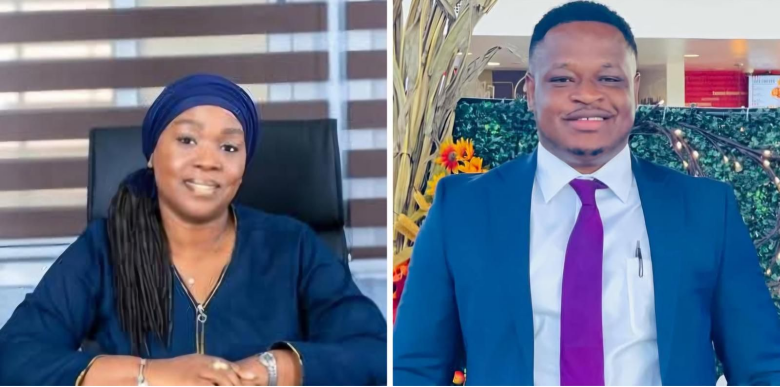
Liberia’s diplomacy has entered a season that deserves sober attention — not because it is loud, but because it is deliberate. In a country where public office is often reduced to routine and symbolism, it is rare to see leadership that treats governance as a mission with measurable outcomes. Since February 2024, Foreign Minister and Dean of the Cabinet H.E. Rev. Sara Beysolow Nyanti has been doing something Liberia has long needed at the Ministry of Foreign Affairs: restoring discipline, professionalism, and purpose to the business of representing the nation.
By Successful Minor
This matters. Foreign policy is not decoration. It is how a country protects its reputation, attracts investment, deepens partnerships, and opens doors for its citizens — including Liberians in the diaspora, whose lives are directly shaped by how the world sees their homeland. For a small nation like Liberia, credibility is currency. When credibility rises, opportunities follow.
From her earliest days in office, Nyanti signaled that business as usual would not define her tenure. One of her first moves was to confront the institutional disorder that had surrounded foreign service placements before she took office. Establishing a special committee to review complaints and irregularities in postings was more than an administrative gesture. It was a message to the system: Liberia’s diplomatic service must be professional, orderly and accountable, not improvised or compromised by confusion and favoritism.
That early insistence on standards has since been mirrored in Liberia’s presence on the multilateral stage. At the African Union, Nyanti’s presence, including representation of President Joseph Nyuma Boakai at high-level gatherings, has reinforced a simple point often neglected: Liberia cannot afford to be absent or passive in the rooms where Africa’s priorities are debated and shaped. Engagement is influence, and influence does not come free.
But diplomacy is not measured solely by the number of meetings attended. It is measured by partnerships built and results secured. In that regard, Nyanti’s push to expand Liberia’s footprint of cooperation stands out. The Roadmap of Cooperation signed with the Kingdom of Morocco for 2024–2026, and the follow-up agreements that broadened Liberia–Morocco relations in early 2025, reflect a foreign policy posture that is increasingly structured, one that seeks outcomes rather than photo opportunities.
Perhaps the clearest signal of Liberia’s growing diplomatic seriousness is the strategic preparation for the country’s bid for a non-permanent seat on the United Nations Security Council for 2026–2027. For Liberia, this is not a trophy. It is a platform, one that can elevate Liberia’s voice in global peace and security debates while strengthening the country’s visibility and leverage on the international stage. Securing such a seat requires planning, persuasion, and credibility. It is the kind of objective that forces a country’s diplomatic machine to operate at full capacity.
Nyanti’s engagements with the United States in 2025 also point to a foreign policy increasingly tied to economic priorities. High-level discussions in Washington focused on investment, migration-related concerns, and broader bilateral cooperation. Her conversations about expanding U.S. commercial involvement, including interest in Liberia’s critical minerals potential, hint at a shift toward diplomacy that is not just political but also economic. Liberia does not need sentimental partnerships. Liberia needs partnerships that create jobs, strengthen institutions, and support national development.
One of the most significant accomplishments cited under Nyanti’s leadership is the signing of a US$124 million memorandum of understanding with the U.S. State Department in December 2025. Whether one views such agreements through a political lens or a development lens, the message is difficult to ignore: major partners are paying closer attention, and Liberia is being treated as a country worth investing in, in policy, in reforms, and in long-term cooperation.
Beyond the headlines, quieter but equally important gains include strengthening regional engagement through ECOWAS commitments, expanding institutional coordination with partners such as Japan, and reforming passport services through decentralization and enhanced security measures. These are the kinds of changes that directly affect citizens. An efficient passport system is not a luxury, it is a dignity issue. It determines how easily Liberians can travel, study, trade, reunite with family, or pursue opportunities abroad.
No public official is beyond criticism, and no administration is without shortcomings. Liberia still faces hard questions about capacity, consistency, and delivery across government. But a fair national conversation must also recognize progress when it is earned.
Nyanti’s tenure, so far, reflects a ministry moving from routine to strategic diplomacy, one that links international engagement to national interest, credibility, and service delivery. Liberia’s diplomatic space has been re-energized, and the country is beginning to project a clearer sense of direction.
Liberians have a saying: Give people their flowers while they are alive. It is not a call for worship. It is a call for honesty — the kind that acknowledges when someone is working, building, and leaving institutions stronger than they found them.
H.E. Rev. Sara Beysolow Nyanti deserves recognition not because she holds a high title but because, under her watch, Liberia’s diplomacy appears to be regaining what it lost for too long: seriousness, discipline, and purpose.
The post Give Her Her Flowers: Sara Nyanti and the Rebuilding of Liberian Diplomacy appeared first on FrontPageAfrica.


Leave a Reply