
Summary:
- A Belgian appeals court ordered Martina Johnson, a senior commander in Charles Taylor’s rebel movement, to stand trial for alleged atrocities committed during Liberia’s first civil war.
- Prosecutors accuse Johnson of participating in killings, mutilations and other abuses during “Operation Octopus,” one of the bloodiest episodes of the conflict.
- The ruling is being welcomed by victims and human rights advocates as a major step toward accountability for crimes committed during Liberia’s wars.
By Anthony Stephens, senior justice correspondent with New Narratives
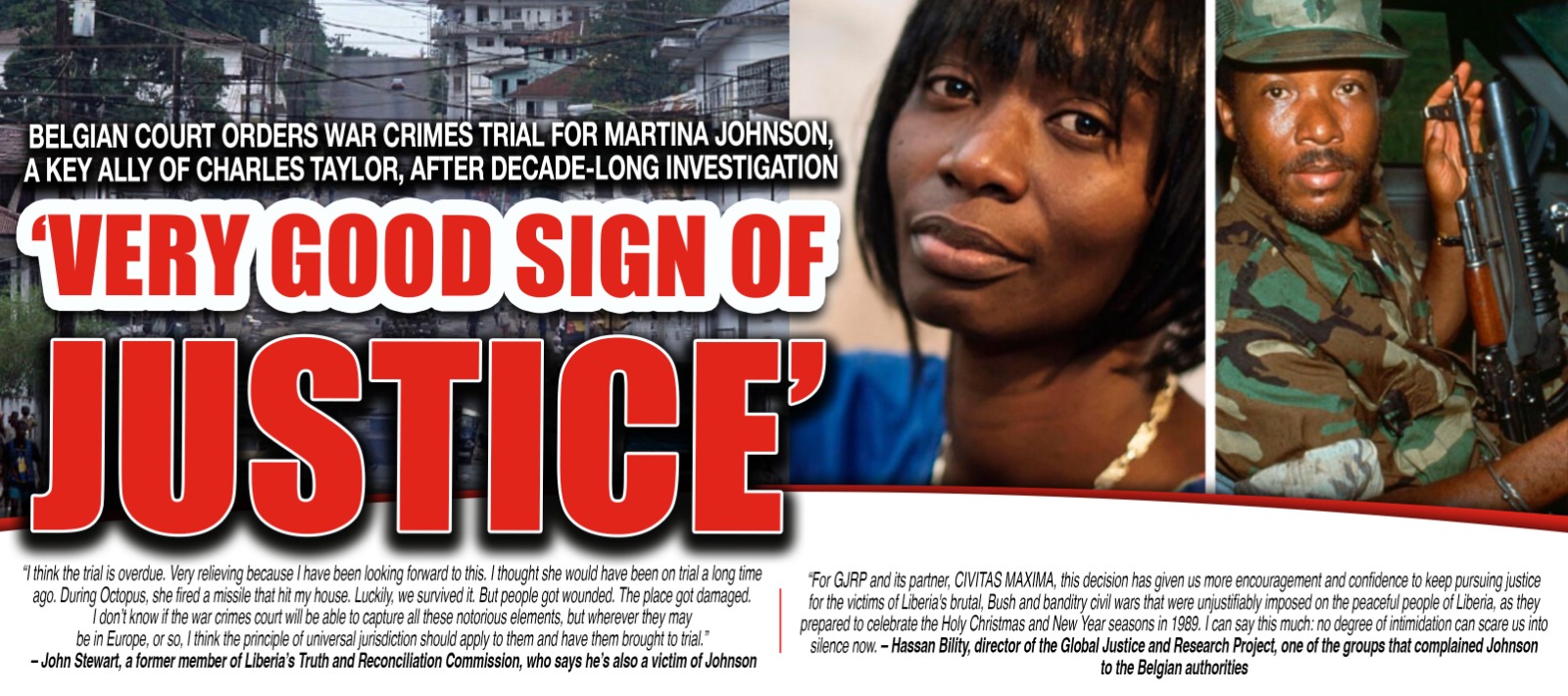
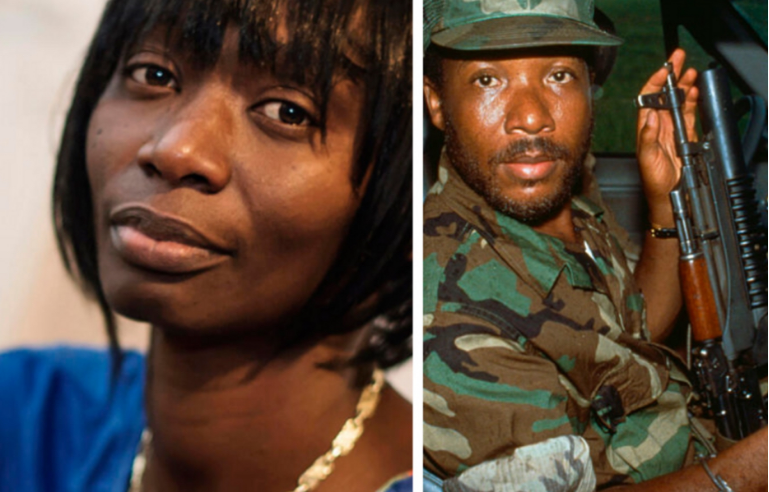
A high court in Belgum ruled on Thursday that Martina Johnson, one of the most powerful women of Charles Taylor’s National Patriotic Front for Liberia, should stand trial for crimes she’s accused of committing during Liberia’s first civil war between 1989 and 1996.
The decision by the “Chambre des Mises en Accusation,” a chamber of Belgium’s appellate court, came more than five months after a court in the city of Ghent formally closed its investigation into the case, ruling that investigators had gathered sufficient evidence to send it to trial.
Johnson, now, 55, has been under investigation for more than 15 years for her alleged role during the war, particularly the infamous Operation Octopus, a four-month operation in 1992 during which rebels, including child soldiers, besieged Monrovia. Belgian prosecutors accused Johnson of participating in mutilation and mass killings during the assault.
In 2020, Jean Flamme, Johnson’s lawyer, questioned what he described as the unfairness of the case, noting that a key witness had already died and expressing concern that other witnesses might also die before the proceedings concluded. No date has yet been announced for the long-anticipated trial, which human rights advocates say could prove one of the most consequential accountability decisions in Liberia’s postwar era. Liberia’s civil wars left an estimated 250,000 people dead and millions displaced.
Johnson has been under strict house arrest in Belgium, where she has been living since 2003, the year Liberia’s civil wars officially ended.
News that she will stand trial was celebrated by victims and human rights advocates.
“I think the trial is overdue. Very relieving because I have been looking forward to this,” said John Stewart, a commissioner of Liberia’s Truth and Reconciliation Commission, who said he is also a victim of Johnson’s alleged atrocities. “I thought she would been on trial a long time ago. Durning Octopus, she fired a missile that hit my house. Luckily, we survived it. But people got wounded. The place got damaged.”
Johnson was a key ally of Charles Taylor, the former Liberian President now serving a 50-year sentence in the United Kingdom for aiding and abetting the civil war in neighboring Sierra Leone. Other victims of Liberia’s wars also welcomed the court’s decision.
“That is a very good sign of justice and that’s what we need,” said Peterson Sonyah, executive director of the Liberia Massacre Survivors Association, one of Liberia’s largest victims’ and survivors’ groups. “That’s what we have been advocating for a period of time. We are very much overwhelmed over the situation. To see that she goes on trial, we are very much happy. We hope that justice will be served in a way that whether perpetrator or victim will see that justice is fair and free.”
Johnson will be the first woman to stand trial for war-related crimes during any of Liberia’s two civil wars. Seven men have previously faced trial for crimes linked to Liberia in the United States and Europe. Agnes Reeves Taylor, Taylor’s former wife, was set to stand trial in the United Kingdom in 2019 before the case was dismissed on a technicality. Her permanent residence status in the country was revoked and she returned to Liberia.
Prosecutors and witnesses say Johnson was an influential member of the NPFL and held several roles, including artillery commander. In its 2009 final report, Liberia’s Truth and Reconciliation Commission, described Johnson as one of the country’s “most notorious perpetrators.”
She is widely remembered for her alleged role in planning and executing Operation Octopus, one of the bloodiest episodes of Liberia’s first civil war, during which hundreds of civilians and members of foreign humanitarian organizations were killed.
Johnson is also accused of personally murdering, torturing and maiming several people at a military checkpoint at the Dry Rice Market, on the outskirts of Monrovia. Taylor’s rebel group committed 63,843—or 41 percent—of all crimes reported to the Truth Commission.
Johnson will be prosecuted under the legal principle of universal jurisdiction, which allows national courts to try international crimes — such as genocide, war crimes and crimes against humanity — regardless of where they were committed. Belgium adopted its universal jurisdiction laws in 1993.
The case stems from a complaint filed in 2012 by the Liberian group Global Justice and Research Project and its Swiss partner Civitas Maxima, acting on behalf of several victims. The complaint prompted an investigation by Belgian authorities that led to Johnson’s arrest two years later on allegations of war crimes and crimes against humanity. In an interview, Hassan Bility, director of Global Justice, said the ruling was an important step toward accountability.
“This decision has given us more encouragement and confidence to keep pursuing justice for the victims of Liberia’s brutal, Bush and banditry civil wars that were unjustifiably imposed on the peaceful people of Liberia,” said Bility, in a text message. “The perpetrators of these crimes need to know that the wheel of justice may be slow; but it will continue to turn in the direction of accountability. This is exactly what has happened.”
Bility’s organization offices were broken into last month and attackers threatened him with violence, but he insisted “no degree of intimidation can scare us into silence now.”
News of Johnson’s upcoming trial came as the trial of Moses Slander Wright, a former Brigadier General of the Armed Forces of Liberia, for criminal immigration fraud, has again been delayed in the United States.
Wright, 73, had been scheduled to go on trial in May. His trial has been postponed several times over the past three years. It is now set for October.
He is accused of leading soldiers during the St. Peter’s Lutheran Church massacre, in which an estimated 600 civilians including men, women, children and babies, who were sheltering in the church were shot and hacked to death.
In August 2016, according to the indictment, “Defendant Moses Slander Wright knowingly made a false statement under oath in a proceeding, and matter relating to naturalization, citizenship, and registry of aliens.”
Prosecutors say Wright falsely answered “No” when asked on U.S. immigration forms and interviews whether he had ever witnessed or ordered troops to engage in acts of persecution or murder, even though they allege he had committed or aided crimes including murder, assault, false arrest and false imprisonment.
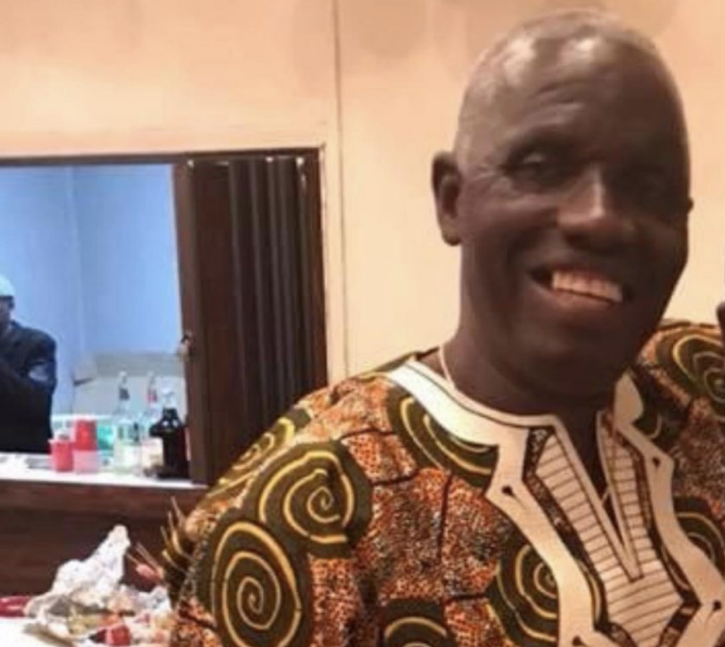
In 2022, a United States civil court, found Moses Thomas, the commander accused of leading the soldiers responsible for the Lutheran Church massacre, liable for the crimes and ordered him to pay $US84 million in damages to victims. Thomas fled the United States and returned to Liberia, denying the charges.
In 2024, hopes for another route for justice for the massacre’s victims were dashed after the Economic Community Court of Justice of West African states (often referred to as the ECOWAS Court) ruled that it could not hear a case brought against the Liberian government for failing to prosecute those responsible, because the events predated the court’s jurisdiction. Sonyah, who lost seven members of his family, including his father in the massacre, said they were saddened by the latest postponement of Wright’s trial.
“This has been a long time since the massacre,” said Sonyah. “So to delay the trial at this time, it makes us feel bad. It’s a very bad time for us as victims and survivors of the St. Peter’s Lutheran Church massacre.”
Liberia is slowly moving to establish its own war crimes court. The Legislature is currently considering six bills that would legalize the court. But victims and advocates say time is running out.
“Perpetrators are dying, as are victims,” Sonyah said. “We are appealing to the Liberian government and our international partners to speed up this process.”
Liberia’s Truth Commission recommended that 116 individuals be prosecuted for serious crimes committed during the wars. But experts say that even if a court is eventually established, only a small number of those considered to bear the greatest responsibility are likely to be tried.
For Stewart, trials abroad remain an important avenue for accountability.
“All these notorious elements, wherever they may be in Europe, or so,” he said. “I think the principle of universal jurisdiction should apply to them and have them brought to trial.”
This story is a collaboration with New Narratives as part of the “Investigating Liberia” project. Funding was provided by the Swedish Embassy in Liberia. The funder had no say in the story’s content.
The post Liberia: Belgian Court Orders War Crimes Trial for Martina Johnson, a Key Ally of Warlord-Turned President Charles Taylor, After Decade-Long Investigation appeared first on FrontPageAfrica.


Leave a Reply