
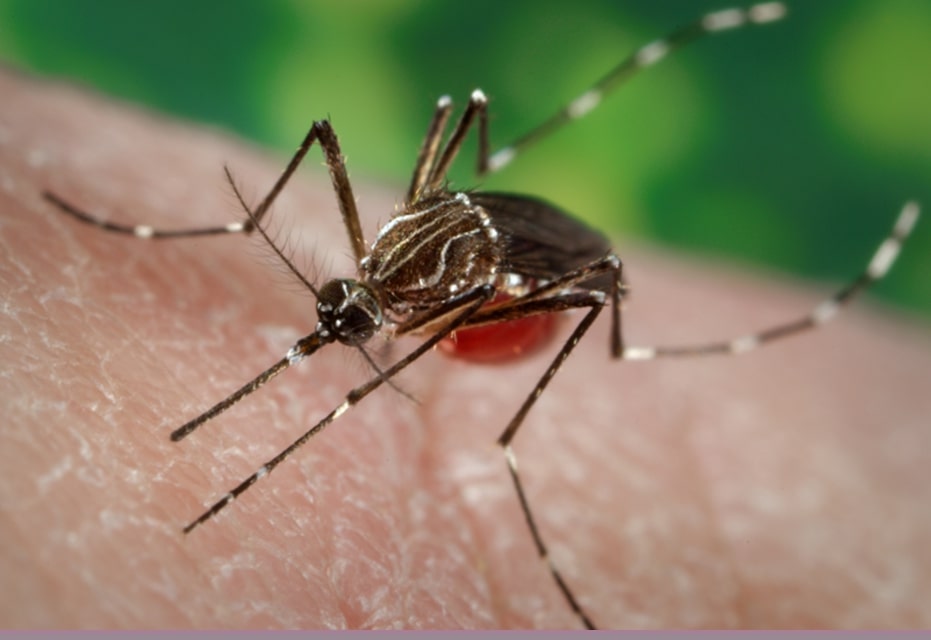
Santa Clara County officials will carry out an aerial mosquito control treatment over the Palo Alto flood basin Wednesday aimed at reducing the population of winter salt marsh mosquitoes.
The treatment, which will be applied via helicopter, will utilize mosquito-hormone regulators and microbes to prevent larvae from developing into adults, according to a press release from the Santa Clara County Office of Communications and Public Affairs.
“As a public health agency, our mission is to protect the community from vector-borne nuisances and diseases,” Dr. Nayer Zahiri, Mosquito and Vector Control District manager, said in the press release. “Mosquitoes don’t take a break during winter, and this treatment will reduce the number of mosquitoes that breed in the marsh before they can fly off and become a problem for community members living or recreating nearby.”
The treatment is slated to begin around 8 a.m., weather permitting, and will last several hours, officials said.
The mosquito variety — also known as Aedes squamiger — can travel as far as 20 miles to seek blood to consume, officials said, and are “opportunistic feeders and aggressive biters.” In the flood basin, they breed in high numbers.
The district monitors the mosquitoes’ breeding levels and monitors the spread of mosquito-borne diseases such as Zika, dengue and West Nile virus, officials added.
The region receiving treatment is nonresidential, officials said, but reducing the population of mosquitoes will help “maintain quality of life for residents in nearby neighborhoods.”
These treatments have been used almost annually since 1992, according to county health officials. The pesticides involved are not harmful to humans, wildlife or beneficial insects when used in the low doses required for this type of treatment, and they do not remain in the environment for long. Any pesticides involved are approved by the state and federal environmental protection agencies.
The district asks that people avoid hiking trails near where the helicopter will be flying at a low altitude to administer the pesticide. Some trails will be closed during the treatment. Signs will be posted near impacted areas.
“There is no risk of exposure to pesticides on open trails during the treatment, and the public will be able to access all areas after the treatment is complete,” the district said.
The Mercury News



Leave a Reply