
Updated on March 13, 2026
So you’ve decided that watching parades of drunk college students wearing plastic shamrock necklaces isn’t quite cutting it for your Irish cultural immersion. Fair enough. Ireland itself waits just five hours east of America’s shoreline—close enough for a long weekend, yet distant enough to feel like you’ve properly escaped. And getting there has never been easier: Aer Lingus is flying its largest-ever transatlantic schedule in 2026, serving 26 North American destinations with new routes to Raleigh-Durham and Pittsburgh. Dublin-JFK and Dublin-Boston each run thrice daily now.
The Emerald Isle has been enjoying fresh attention lately, not just for its ancient stone circles and frothy pints, but for its kitchens. The 2026 Michelin ceremony—held in Dublin for the first time, hosted by Gordon Ramsay—brought the island’s star count to 25. On the hospitality front, The Hoxton made its Irish debut in a meticulously restored Victorian-era building on Exchequer Street in Dublin, complete with Viking-era archaeological finds displayed in the lobby and a subterranean nightclub—the brand’s first globally. Galway is getting its first five-star hotel in more than 20 years. And the countdown to the centenary Ryder Cup at Adare Manor in 2027 is reshaping County Limerick’s entire infrastructure, from hotels to museums.
This year’s St. Patrick’s Festival (March 14-17) carries the theme “Roots”—celebrating the living connections between Ireland and its diaspora—with a parade of more than 3,000 participants, 12 floats by independent pageant groups including Macnas and Buí Bolg, and Vogue Williams serving as grand marshal. It’s indicative of why Ireland separates itself from the theme-park version: you can still stumble upon genuine when you know where to look. The country remains mercifully compact, and its true currency has always been its people, who’ve elevated conversation and humor to an art form and hospitality to a sacred duty. Their gift for turning strangers into confidants over a shared pint is less a party trick than a cultural instinct, and a reminder that travel’s most lasting souvenir is often friendship.
The Ultimate Ireland Travel Guide
-
Dublin: Literary Legacy and Contemporary Cool -
Galway: Artistic Soul of the West -
County Kerry: Kingdom of Natural Splendor -
County Donegal: Untamed Northwest Frontier -
County Clare: Atlantic Drama and Musical Traditions -
Cork: Rebel City and Culinary Capital -
County Wicklow: Garden of Ireland -
The Aran Islands: Time Capsules of Celtic Culture -
County Mayo: Adventure Playground of the West -
Belfast: The North’s Unfinished Renaissance -
County Limerick: The Ryder Cup and a New Cultural Center of Gravity -
County Wexford: Ireland’s Secret Showstopper -
The Midlands: Ireland’s Quiet Revelation
Dublin: Literary Legacy and Contemporary Cool
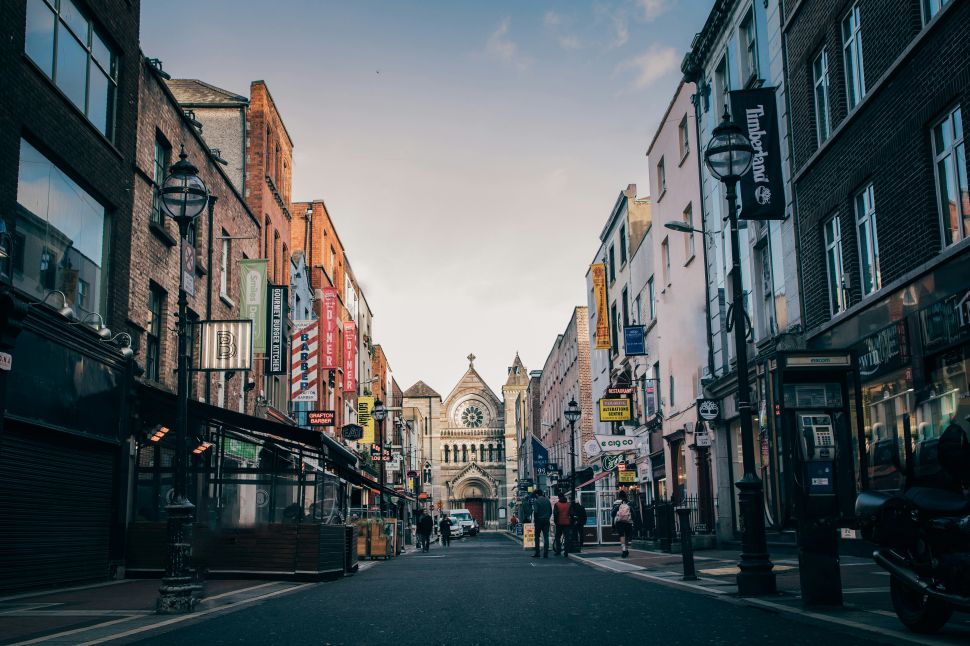
Dublin rewards those who dare to wander past the obvious. Start at Kilmainham Gaol, where Ireland’s fight for independence lands with full emotional force (pre-book or regret it), then balance the gravity with literary mischief at Sweny’s Pharmacy, immortalized in Ulysses, where you can still buy Leopold Bloom’s lemon soap. First-timers will want the Book of Kells at Trinity and possibly the Guinness Storehouse, though locals will tell you the best pint is wherever the tourists aren’t. After dark, skip Temple Bar entirely—instead, catch emerging acts at Whelan’s or traditional sessions at The Cobblestone in Smithfield, where the music hasn’t been sanitized for visitor consumption. Local gastronomy is stacking accolades. Forest Avenue earned a new Michelin star in February 2026. Amai on Harry Street brings Brazilian-inflected fine dining. Mark Moriarty opened a combined media studio, test kitchen and restaurant at Wilton Park. And a deconsecrated church on Suffolk Street is becoming a 12-vendor European-style food hall by 2027, because the Irish have never met a sacred space they couldn’t repurpose with a straight face. Theater lovers should catch the Abbey Theatre’s centenary staging of The Plough and the Stars through April—the play that caused actual riots at its 1926 premiere.

Photo by Gregory DALLEAU on Unsplash.
Galway: Artistic Soul of the West
Galway is a microcosm of Ireland’s creative soul, and delivers it in a walkable package where traditional music spills from colorful doorways and street performers animate pedestrian zones. The spirit reaches its apex during the Galway International Arts Festival in July, which will feature the Patti Smith Quartet, The Flaming Lips with Mercury Rev and James, transforming medieval streets into an open-air stage. Book ahead for Michelin-starred Aniar, where chef JP McMahon builds tasting menus from foraged coastal ingredients. The newest star belongs to The Pullman at Glenlo Abbey, where chef Angelo Vagiotis serves fine dining inside two original Orient Express carriages—a detail so improbable it could only be real. Daróg Wine Bar rounds out the scene with unpretentious pours and sommelier Zsolt Lukács’ steady hand. The biggest hospitality news is The Hawthorn by Galway Bay, a $65 million, 114-room five-star property opening this spring in Oranmore, breaking Galway’s 20-year dry spell of new luxury hotel openings. Alternatively, Ballynahinch Castle remains the atmospheric go-to—700 acres of Connemara woodland, fly fishing and the Twelve Bens as backdrop. Use Galway as your gateway west: hike Connemara’s blanket bogs or cycle the 26-mile Great Western Greenway along abandoned railway lines.

Photo by Chan Hyuk Moon on Unsplash.
County Kerry: Kingdom of Natural Splendor
The bar is high, but Kerry may boast Ireland’s most dramatic geography. The peninsulas stack west into the Atlantic like knuckles, MacGillycuddy’s Reeks rising behind harbor towns where the paint on the shopfronts fades at the same rate the weather changes. The Ring of Kerry works as a multi-day road trip, though the Dingle Peninsula—rawer, a little bit stranger and more Irish-speaking—rewards those who push further north. The essential pilgrimage remains Skellig Michael, a Unesco site where sixth-century monks hauled stones up an impossible rock face to build beehive huts 600 feet above open ocean. Book landing tours months in advance. The newest draw is the South Kerry Greenway, which opened its first two-mile section in December 2025. When complete, the 17-mile trail between Glenbeigh and Cahersiveen along the old railway line over Dingle Bay will be one of the finest cycling routes in Europe. Valentia Island Lighthouse offers overnight stays in the lightkeeper’s cottage for those who want the Atlantic on all sides. After days in Killarney National Park by foot or traditional jaunting car, retreat to Sheen Falls Lodge, the former country house of the Marquis of Lansdowne, where the kitchen runs on Kerry’s own seafood, game and produce.

Sheen Falls Lodge.
County Donegal: Untamed Northwest Frontier
Donegal remains Ireland’s final frontier, a wild landscape where Irish is still spoken daily and tourists remain scarce despite scenery that rivals any on earth. Sliabh Liag (Slieve League) rises nearly three times higher than the Cliffs of Moher. The moderate 45-minute walk from the car park gets you there; a boat tour from Teelin Pier lets you feel the scale from below. Malinbeg Beach requires descending 170 steps to a horseshoe bay for a bucket-list Atlantic swim. Narin Strand stretches pale-gold sand to the horizon. Language enthusiasts immerse themselves in Irish at Oideas Gael in Glencolmcille, where classes run for beginners and advanced speakers alike. Donegal is also one of Ireland’s certified Dark Sky viewing areas, and a significant partial solar eclipse on Aug. 12, 2026, is expected to draw visitors to the northwest. Lough Eske Castle offers five-star luxury overlooking its namesake lake, while the lightkeeper’s cottages at Fanad Head Lighthouse—voted among the world’s most beautiful—book months in advance.

Photo by Ainars Djatlevskis on Unsplash.
County Clare: Atlantic Drama and Musical Traditions
Perhaps Ireland’s most emblematic site, County Clare is where the Cliffs of Moher drop straight to the Atlantic, just miles from the Burren’s otherworldly limestone plateau, where Arctic-Alpine plants grow alongside Mediterranean species. Locals advise visiting the cliffs at sunset, once the tour buses clear out. Clare’s cultural heart is Doolin, where nightly sessions in pubs like McGann’s and McDermott’s feature some of the country’s finest traditional musicians after 8 p.m.
After coastal hikes, the Wild Atlantic Seaweed Baths on Doolin Pier offer whiskey barrel hot tubs with ocean views. Dromoland Castle Hotel provides 16th-century grandeur following a $23 million renovation across its 97 rooms, with falconry walks, pony-and-trap rides and an 18-hole championship course. County Clare also boasts Shannon Airport, which posted its highest passenger numbers in 16 years in 2025 (2.3 million travelers) and is investing $43 million in terminal modernization, with 40 routes now making it the largest schedule in 17 years.

Dromoland Castle Hotel.
Cork: Rebel City and Culinary Capital
Cork wears its “real capital” status like a badge of honor—a claim Corkonians defend with the same stubborn pride that flavors their distinctive accent. The English Market, trading since 1788, serves as the city’s larder and social hub. Upstairs at Farmgate Café, the brave sample tripe with drisheen. After the stalls, duck into the Long Valley for a pint and toasted sandwich, because you’ll need sustenance for the climb to St. Anne’s Church, where ringing the Shandon Bells earns both panoramic views and bragging rights. The wider Irish whiskey boom continues; there are roughly 50 operational distilleries now, up from four in 2010, with Walsh Whiskey opening a $37 million distillery at an 18th-century corn mill in nearby County Carlow. For dinner, Elbow Lane‘s deep-fried pork belly with fish sauce caramel would impress the monks who first distilled uisce beatha. Sleep where history happened at the Imperial Hotel—the site of Irish revolutionary Michael Collins’ last address before his 1922 assassination—or choose The River Lee‘s modern rooms framing the waterway that splits this city in two. Cork’s Crawford Art Gallery, which is undergoing a $100 million redevelopment by Grafton Architects, is closed until late 2028.

Photo by Derek O’Keeffe on Unsplash.
County Wicklow: Garden of Ireland
They call Wicklow the Garden of Ireland, though “garden” undersells what amounts to Dublin’s green lung. Thirty minutes from the capital’s last traffic light, the landscape shifts with the abruptness of a changed channel. Powerscourt Gardens earns its National Geographic ranking: 47 acres where formal Italian terraces and statuary sit against Great Sugar Loaf Mountain. In Wicklow Mountains National Park, trails snake through glacier-carved valleys toward Glendalough, where sixth-century monks built a settlement between twin lakes. Sally Gap’s moody expanses appeared in Braveheart and P.S. I Love You, though the real spectacle is purple heather stretching to the horizon. Dining runs from The Strawberry Tree‘s certified organic fare to Hunter’s Hotel’s traditional Sunday roasts. Sleep at five-star Powerscourt Hotel Resort or opt for BrookLodge’s eco-village, complete with pub, bakery and brewery.

BrookLodge.
The Aran Islands: Time Capsules of Celtic Culture
The Aran Islands sit off Galway’s coast like three limestone castaways stubbornly resisting mainland notions of progress. These windswept outposts, accessible only by ferry or small aircraft from Galway or Doolin, offer immersion in a lifestyle seemingly unchanged for centuries. On Inishmore, the largest island, Dún Aonghasa fort perches on soaring cliffs with the dramatic flair of a Game of Thrones set piece, though it predates television by about 3,000 years. Rent bicycles to navigate the maze of stone walls that segment the islands into a geometric puzzle visible from every vantage point. Literary types slip away to quieter Inishmaan, where J.M. Synge’s cottage stands much as he left it—the island dialect that fascinated him still bounces between stone walls and narrow lanes. Culinary expectations require adjustment: fresh-caught fish at Tí Joe Watty’s pub (with nightly music sessions) offers simple perfection, while harbor cafés serve tea strong enough to stand your spoon in. Overnight options range from sparse B&Bs in whitewashed cottages to the relative luxury of Man of Aran Cottage. Day-trippers miss the islands’ essential magic—when ferries depart, taking the outside world with them, and stars crowd night skies unadulterated by artificial light.

Discover Ireland.
County Mayo: Adventure Playground of the West
Mayo is where adventure comes without queues and sacred sites arrive without tour bus soundtracks. Croagh Patrick, where St. Patrick reportedly fasted for 40 days, likely because the views from the 2,500-foot summit temporarily killed his appetite. Céide Fields preserves 5,500-year-old stone walls emerging from blanket bog like prehistoric graph paper. Keem Bay on Achill Island lays down a perfect crescent of golden sand between green headlands—an improbable Mediterranean scene with a distinctly Irish water temperature. The biggest new arrival in the west is The Grace at Westport Estate, a 129-room luxury hotel opening in spring 2026 on the 430-acre Westport Estate. Named for Grace O’Malley, the 16th-century Pirate Queen, and Grace Kelly (connected to Mayo through ancestry), the hotel was designed by Mayo-based Taylor McCarney architects. The wider estate includes the restoration of 300-year-old Westport House and new gardens by Mary Reynolds. For something proven, Belleek Castle near Ballina features the Armada Bar built from Spanish galleon timbers—possibly the only place in Ireland where having a drink literally puts you at sea.
Foodwise, expect fresh-caught fish at Tí Joe Watty’s pub (with nightly music sessions) for simple perfection, while harbor cafés serve tea strong enough to stand your spoon in. Overnight options range from sparse B&Bs in whitewashed cottages to the relative luxury of Man of Aran Cottage. Day-trippers miss the islands’ essential magic—when ferries depart, taking the outside world with them, and stars crowd night skies unadulterated by artificial light.

Knockranny House Hotel.
Belfast: The North’s Unfinished Renaissance
Belfast earned its place on credible itineraries years ago. What’s happening in 2026 makes the case irrefutable. The city fields a food scene and cultural calendar that rival Dublin’s, without the crowds or the hotel tariffs. The single most significant cultural event on the island this year is Fleadh Cheoil na hÉireann, the world’s largest festival of Irish music, coming to Belfast for the first time (Aug. 2-9). Organizers expect more than 500,000 visitors in a city that UNESCO designated a City of Music. Beau on Warehouse Lane opened under chef Lottie Noren, a BBC Great British Menu finalist, with French-leaning sharing plates. Capparelli at the Mill brings an Ottolenghi alumnus’ Mediterranean sensibility to Northern Irish produce. Ox, Deanes EIPIC and The Muddlers Club continue to anchor a restaurant culture punching well above the city’s weight. The Bedford Hotel opens in May 2026 in the Grade B1-listed Scottish Mutual Building on Donegall Square, an 82-room property inside a 1904 Scottish Baronial landmark. Titanic Belfast and the street murals of the Falls and Shankill roads remain essential. Take a black cab tour run by former participants on both sides of the conflict for the most direct way to encounter the complexity.

K. Mitch Hodge / Unsplash
County Limerick: The Ryder Cup and a New Cultural Center of Gravity
Limerick operated for decades as the place you drove through on your way to Kerry or Clare. The centenary Ryder Cup is changing that, hosted at Adare Manor (Sept. 17-19) to mark 100 years since the first match. Captain Luke Donald is seeking an unprecedented three-peat for Europe. The Tom Fazio-designed course ranks among the finest parkland layouts in the world, and the Neo-Gothic estate was at capacity well before the announcement.
Beyond golf, the JP McManus family is gifting the RIBA Stirling Prize-winning building on O’Connell Street to the State. It becomes the National Women’s Museum, a new branch of the National Museum of Ireland, with stakeholders working toward opening ahead of the Ryder Cup. Adare village itself deserves time: thatched-roof cottages, a 13th-century Franciscan friary and Aunty Lena’s, a pub that resists pretension of any kind. For those priced out of the manor, Dunraven Arms offers comfortable rooms and a bar where locals and visitors share space without self-consciousness. In Limerick City, the Saturday Milk Market is one of Ireland’s finest.

Colin C. Murphy / Unsplash
County Wexford: Ireland’s Secret Showstopper
Wexford occupies a peculiar position in Irish travel: a southeast corner most Americans drive past, overlooking a cultural institution with genuine international stature. Wexford Festival Opera celebrates its 75th anniversary in 2026 (Oct. 15-31). The 17-day festival features three main-stage operas, a world premiere by Alberto Caruso with a libretto by Colm Tóibín, and—for the first time—a public vote that selected Rossini’s “L’equivoco stravagante.” A 75th Celebration Concert brings soprano Ermonela Jaho and tenor Joseph Calleja with the National Symphony Orchestra. The National Opera House is small enough to read the singers’ expressions from the back row. Beyond the opera house, the Irish National Heritage Park reconstructs 9,000 years of settlement across 35 acres. Curracloe Beach, six miles of dune-backed sand that stood in for Omaha Beach in Saving Private Ryan, is 15 minutes north. Hook Lighthouse, dating back to the fifth century, anchors a coastal drive that rivals Kerry’s for drama, if not fame.

E. Vos / Unsplash
The Midlands: Ireland’s Quiet Revelation
The Irish government’s new tourism policy, launched in December 2025, targets 35 percent visitor growth for the Hidden Heartlands and Ireland’s Ancient East. The proof of concept arrives this summer in Abbeyleix, County Laois, where chef Cúán Greene opens Ómós—a 30-to-40-seat restaurant and 16-bedroom guesthouse with a millpond, walled gardens and a regenerative farm. Greene trained at Noma and Geranium in Copenhagen, and every serious food observer in Ireland considers this an immediate Michelin contender. Kilkenny, 40 minutes south, remains the country’s finest medieval town: the castle anchors one end, the cathedral the other, and the craft-and-food culture between them fills a weekend easily. Killeen Castle in County Meath, an 800-year-old fortress at the center of a Jack Nicklaus Signature golf course, begins renovation this spring with a projected 43-room luxury reopening in 2028. The Boyne Valley contains Newgrange—a Neolithic passage tomb older than the pyramids of Giza, aligned with the winter solstice sunrise in a feat of engineering that still confounds.

Adrien Olichon / Unsplash
Observer



Leave a Reply