
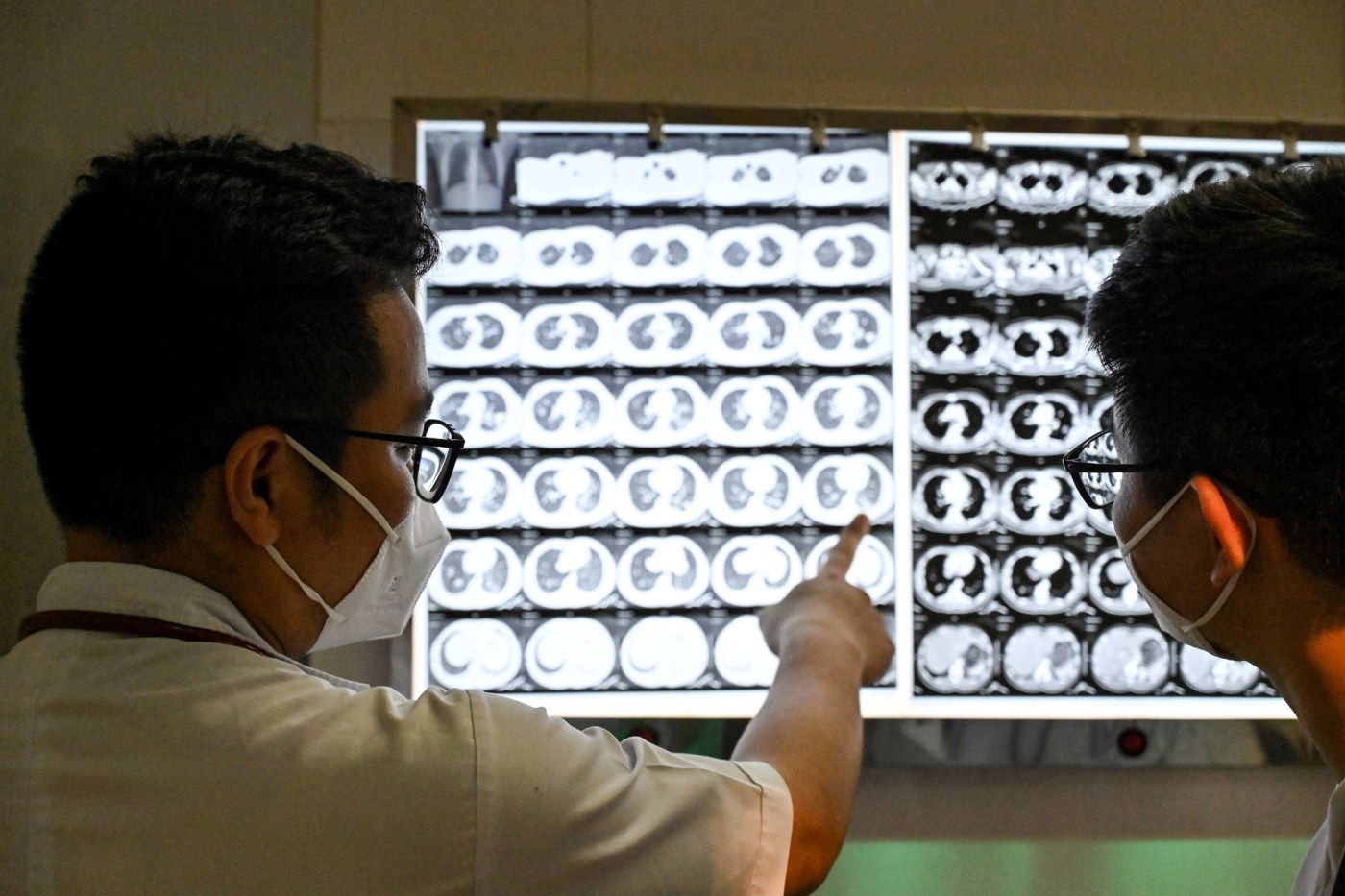
The San Francisco Public Health Department has launched a “large-scale TB contact investigation” after a tuberculosis outbreak this week at Archbishop Riordan High School infected at least three students, prompting administrators to cancel classes and basketball games in an attempt to stop its spread.
In addition to the three active cases, public health officials have identified at least 30 latent TB infections — cases in which people carry the bacteria but are not contagious — though experts stress the situation does not signal a broader outbreak.
Still, they are working to isolate the outbreak before it expands in the Bay Area, which has some of the highest rates of TB in the state.
Tuberculosis is a bacteria that usually attacks the lungs, infecting the air sacs where they multiply and spread. If the infection is not contained by the body’s immune response, the bacteria destroys lung tissue which can trigger chest pain and coughing up of mucus or blood. Eventually, infection can spread throughout the body via the bloodstream, often to the kidneys, liver and heart muscles.
“Here in California, about 30% of the cases are transmitted locally,” said Stanford TB researcher Jason Andrews, who has led vaccination campaigns across South America and Ethiopia. “When somebody who has TB of the lungs exhales the TB in an indoor environment and somebody else inhales (it), that’s the route for transmission.”
Andrews said TB outbreaks are infrequent and usually small. The vast majority of people infected with TB have a latent form of the bacteria, mycobacterium tuberculosis, which remains dormant and non-transmissible — sometimes a hibernating infection can lie dormant for decades.
“The average person, if they’re infected with TB, will only have about a 10% lifetime risk of developing the disease,” said Andrews. “The other 90% of people will never develop the disease. They will be infected, and either the body will clear it or they will go on for the rest of their lives.”
Unlike COVID-19, which has a high rate of infection and spreads quickly, TB spreads slowly – usually in crowded areas – yet is far deadlier without treatment. Last year, TB overtook COVID-19 as the world’s deadliest infectious disease.
The Bay Area has experienced an uptick in TB cases since the end of COVID-19 restrictions. In 2023, Santa Clara County reported a 19% jump in cases, totaling 168 people. Alameda County reported 126 cases, with a rate of 8.2 cases per 100,000 – more than double the national average.
Alameda County Tuberculosis Controller Dr. Amit Chitnis said fewer than 5% of people in the United States have the disease, but it is higher among people born outside of the country. About 95% of TB cases occur among people from Latin America or Asia, he said.
“The US has abandoned vaccines for TB,” Chitnis said. “It’s no longer effective given our situation. It is still used in other developing countries to prevent children from developing TB.”
In Alameda County, active TB cases are centralized in Oakland’s Chinatown, with other elevated rates found in south San Leandro, west Hayward, Union City and south Fremont, according to a 2024 Alameda County Public Health Department report. Tuberculosis infections are often most prevalent among the poor because poverty, with the slate of poor nutrition, weak sanitation and cramped living, creates ideal conditions for bacteria to spread and thrive.
“There’s so much pressure on our immigrant communities in the current climate — we want them to know we’re here for them and they should continue to seek care without fear,” said Alameda County Supervisor Lena Tam, whose district includes Oakland Chinatown. “Providing wrap-around support to ensure that people take their medication, and consistent follow-up, is critical for TB control.”
The outbreak at Archbishop Riordan underscores the constant effort required by public health officials to fight tuberculosis in the U.S., Chitnis said. The effort to neutralize its spread entirely will require preventative treatment of latent TB and an investment in outreach to poor, marginalized and immigrant communities, he said.
“As an example, take someone who came to the US from Asia. They had L-TB and they were never treated… It’s not something that they’re doing or where they’re living in. This exposure happened a long time ago,” Chitnis said. “If and when that person breaks down, the importance of the public health department is to investigate who they’re living with and prevent them from developing TB.”
The San Francisco Department of Public Health did not confirm the source of the first TB infection identified at Archbishop Riordan High School, but the public health agency said it is taking an aggressive approach to prevent TB from spreading to students, teachers, staff and the broader community.
The school said “protective measures” are being implemented in close consultation with public health officials.
“SFDPH and school leadership have implemented a public health response including required testing for all students and staff as part of a coordinated screening and contract tracing effort,” the agency said in a statement. “SFDPH is also providing ongoing medical and public health guidance to reduce the risk of transmission.”
The Mercury News



Leave a Reply